NARA: A DATE WITH THE DEER
Some places become destinations.
Others become unfinished business.
On our first trip to Japan, we skipped Nara entirely.
My son — yes, the same one who nearly launched himself off a cliff in Kyoto — was not quite ready for hundreds of free-roaming deer. Between my vivid imagination, concerns about ticks, and a healthy fear of being trampled by wildlife, Nara felt like a bridge too far.
So we passed.
Then we came home.
A few weeks later, my friend Ruth casually mentioned that Nara had been her absolute favorite part of Japan.
Favorite.
Not Tokyo. Not Kyoto. Not the bamboo forests or the temples or the sushi.
Nara.
The moment she said it, I knew we'd be back.
And we were.
The following spring break, we boarded a plane to Japan again, driven largely by one thing: a date with the deer.
Fortunately, my son was now eight years old and marginally more trustworthy. Before departure, there were several conversations about personal space, listening skills, and the general expectation that he would not attempt to become one with nature.
We took the train from Osaka to Nara and stepped into what felt like another world.
For a brief moment, I felt like Snow White.
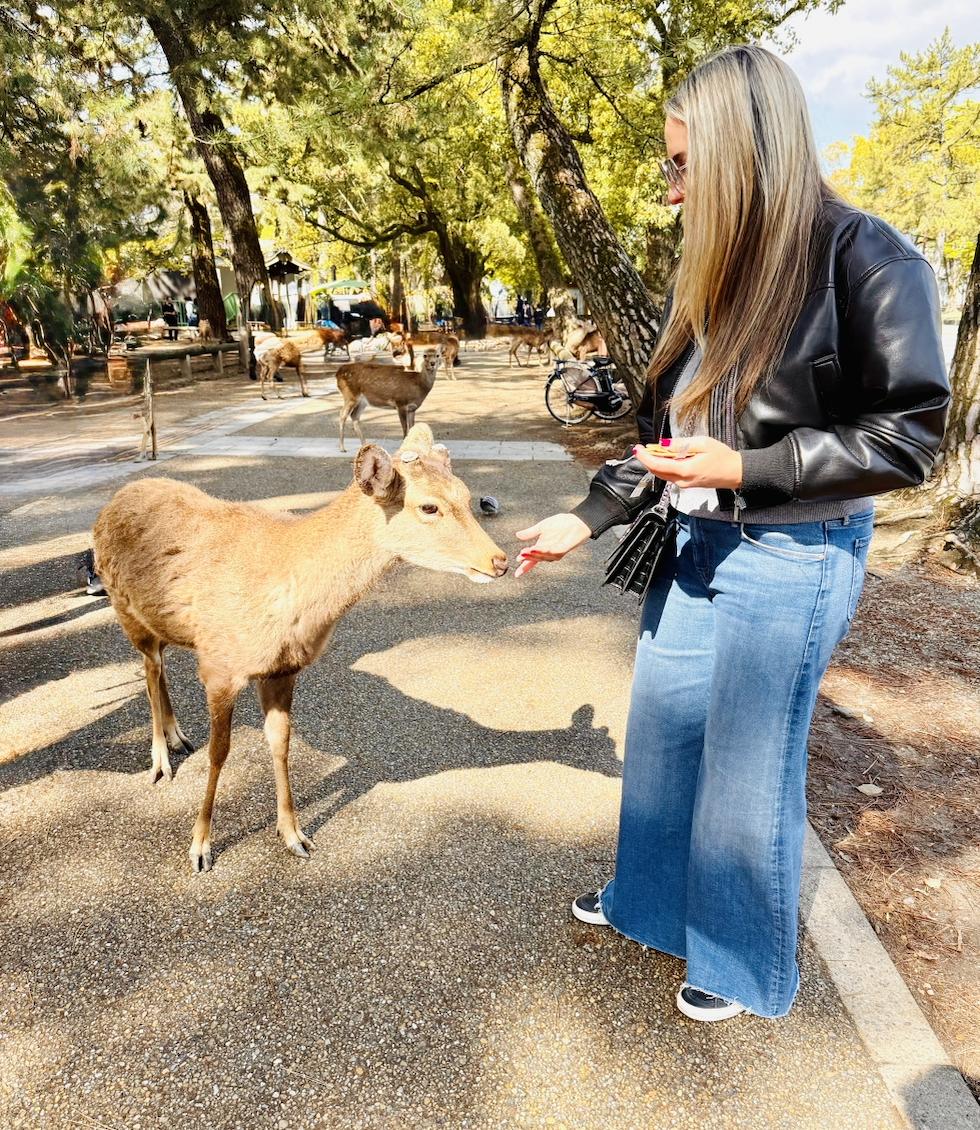
Then the deer arrived.
Lots of them.
Very close to my face.
So perhaps Snow White, but with a touch more anxiety.
The deer are everywhere from the moment you arrive. As you walk toward the park, vendors line the pathways selling stacks of special crackers to feed them. It's absolutely a tourist experience, and absolutely worth it.
Crackers in hand, my daughter, son, and I ventured in.
My husband — a relatively new animal lover — chose the role of photographer and maintained a comfortable distance while documenting our bravery.
The deer, however, had no interest in personal boundaries.
They surrounded us immediately.
What makes Nara's deer so famous isn't just their fearlessness. It's that they bow.
Actually bow.
Like a respectful Japanese greeting.
At first I thought it was one of those travel myths that sounds too charming to be true. Then it happened right in front of us.
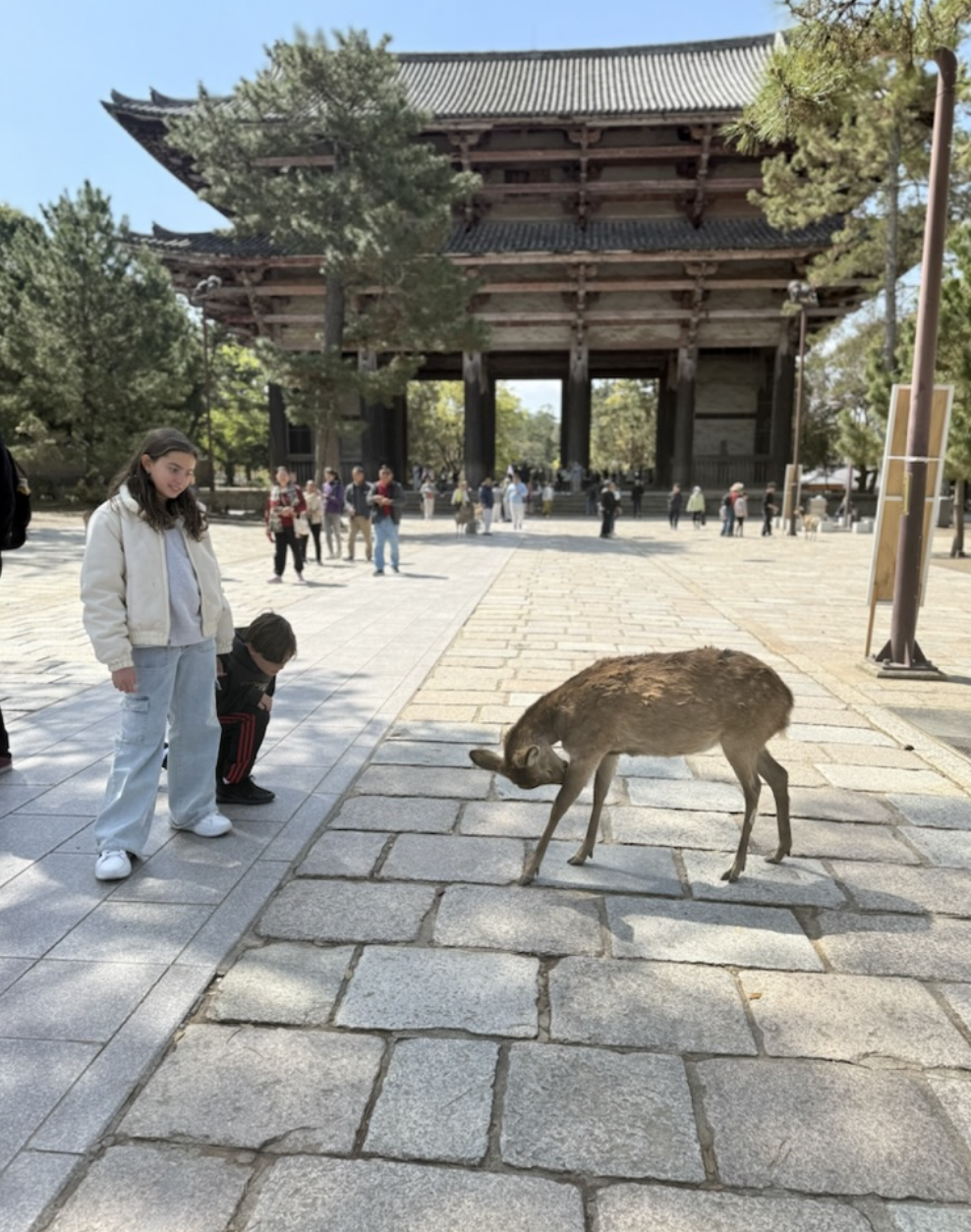
A deer bowed.
We bowed back.
The deer bowed again.
And somehow my son became the family expert, explaining the entire ritual while I stood there holding crackers and questioning how we had reached this point in our lives.
I'll give him this one.
He was right.
After the initial chaos of feeding deer and trying not to get headbutted by particularly enthusiastic ones, the experience changes.
The crowds thin.
The pathways widen.
And suddenly you're walking through something that feels ancient.
Because Nara isn't just about deer.
It's about history.
This was Japan's first permanent capital, and you can feel it. Massive temple gates rise from the landscape. Ancient wooden structures seem to emerge from the trees. The entire city feels suspended between nature and history in a way that's difficult to describe and impossible to forget.
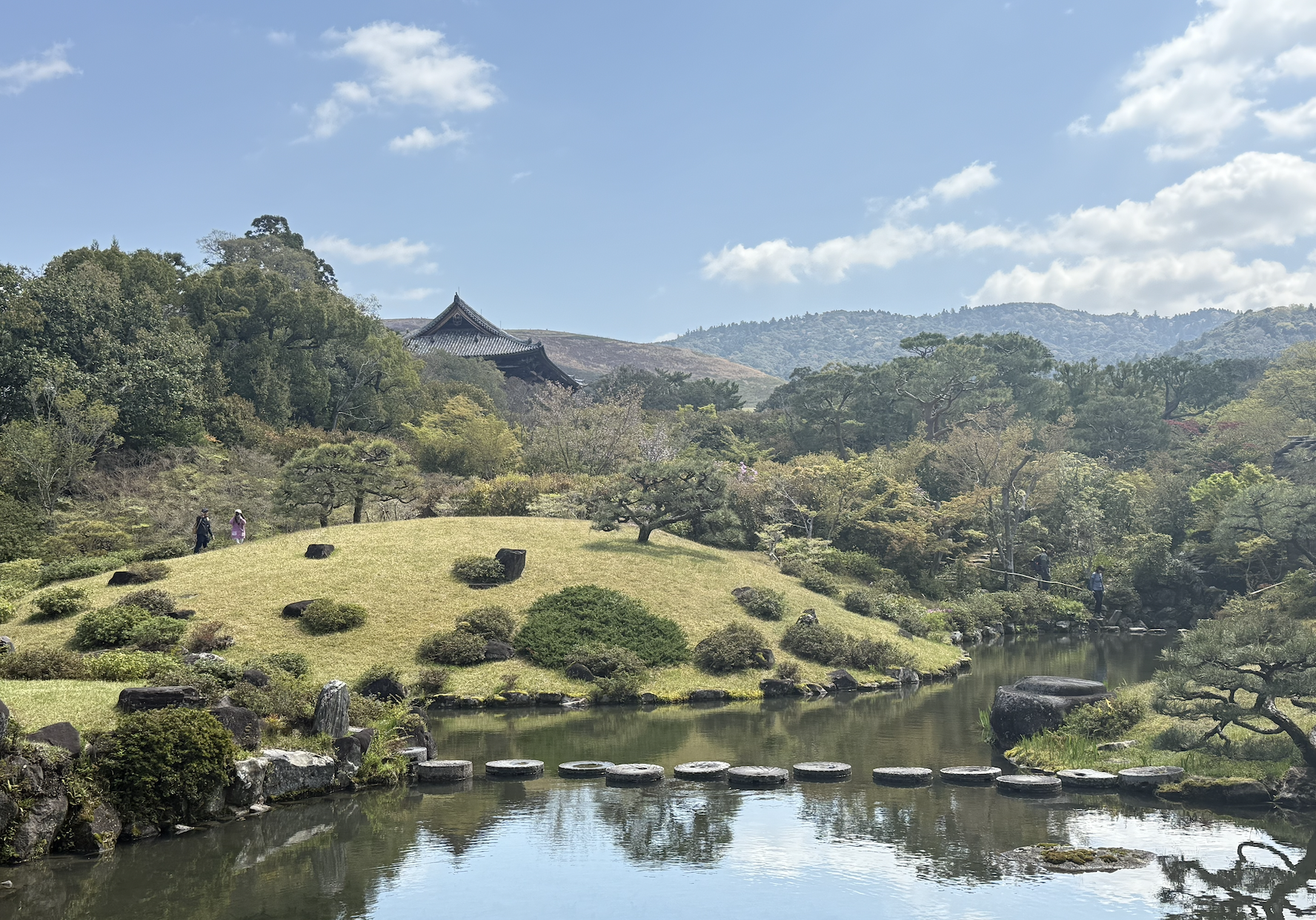
The beauty is quieter than Kyoto.
Less polished.
More timeless.
The deer may be what bring people here, but they're not what stays with you.
It's the feeling of walking through a place that has existed for centuries and somehow still feels magical.
Ruth was right.
Nara wasn't just worth the trip.
It was worth returning to Japan for.